I Built a Mobile App in 3 Weeks. Then I Found Out It Already Existed — for Free.
Note: this post is from an earlier phase of my journey — my current focus is cybersecurity. Here’s the guide to how I’m breaking into it.
I’d been coding for maybe two months. I’d learned JavaScript, pivoted to AI agents in Python, and thought: I’m ready to build a business. Not a side project. A business.
Three weeks later, I downloaded someone else’s app and realized mine was already dead.
This is the story of how I went from that confidence to knowing I was wrong. And why the failure was still worth it.
The Setup
I’d just finished some important high school exams and had time to breathe for the first time in months. I started learning to code. JavaScript first, then AI agents in Python. I was picking things up fast, and that speed made me feel invincible.
Around the same time, I’d been trying to improve my productivity. I’d read about GTD (Getting Things Done) but never stuck with it. Tools like Notion and Todoist felt too complex, too long to set up. My attention span couldn’t handle it.
So I had an idea: build a mobile GTD app for myself. Simple, clean, designed for people like me who wanted a simplified GTD workflow without the overhead. And maybe — ambitiously, I know — turn it into a business.
At the time, my confidence was sky high. I was learning so fast. How hard could building an app be?
Building the App
I skimmed a React Native tutorial and jumped straight in. The first version, I wrote by hand. It was slow and messy.
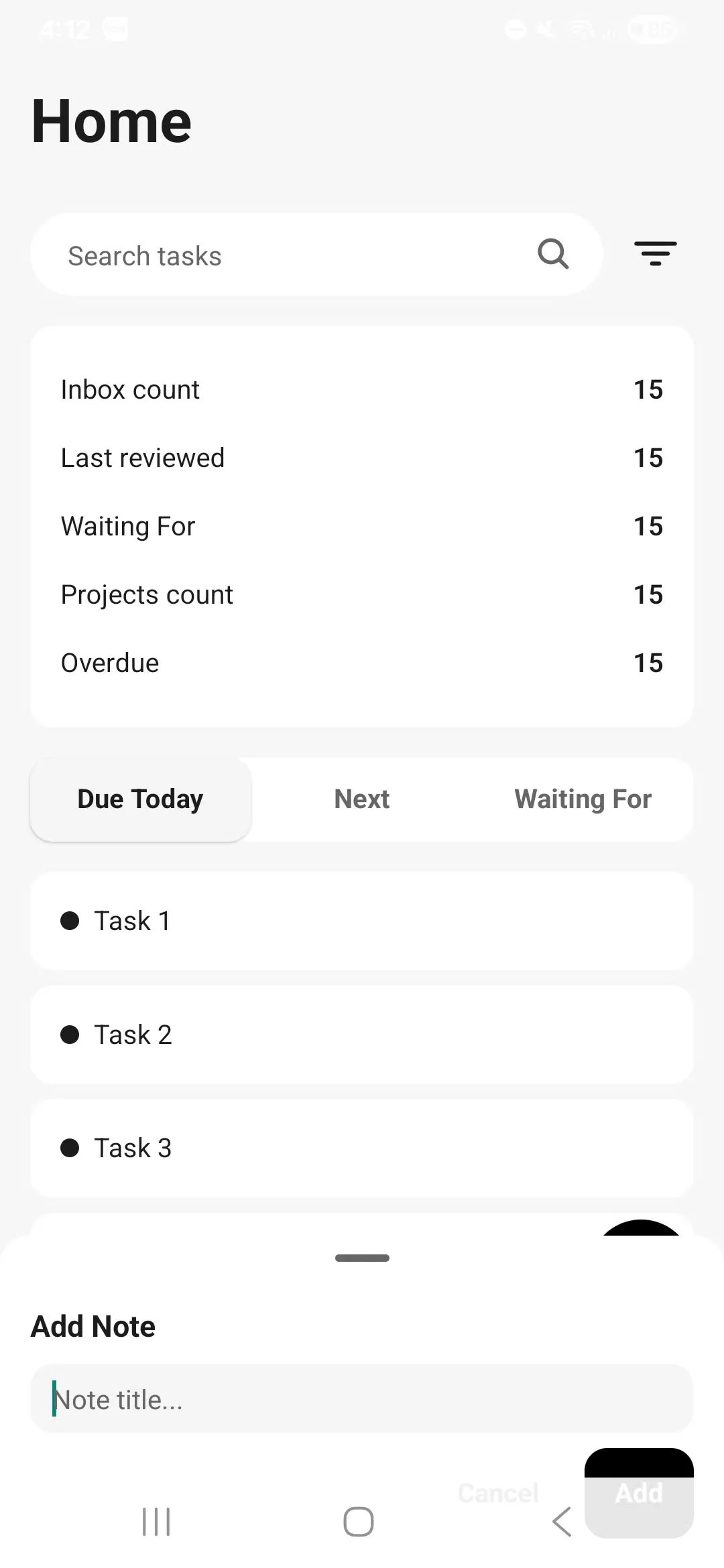
Then I discovered vibe coding, using AI to help structure and generate code. I restarted the project (Ord), this time researching the tech stack a bit more. React Native for the frontend, Supabase for the backend. I defined the architecture, planned the features, and coded with actual structure instead of just throwing things at the wall.
It worked. The app was nearly done. It looked good. I was proud of it.
I thought: this is going to work.
Searching for Users
I knew I needed to find people with the same problem. So I went to Reddit.
I expected to find a crowd. Instead, I found crickets. Two people, maybe, in comments that were months old. Nobody was actively looking for what I was building.
Worse, the GTD subreddit had one piece of advice that kept coming up: “Don’t trust apps. Find your own setup.” The mods explicitly said it. The community echoed it.
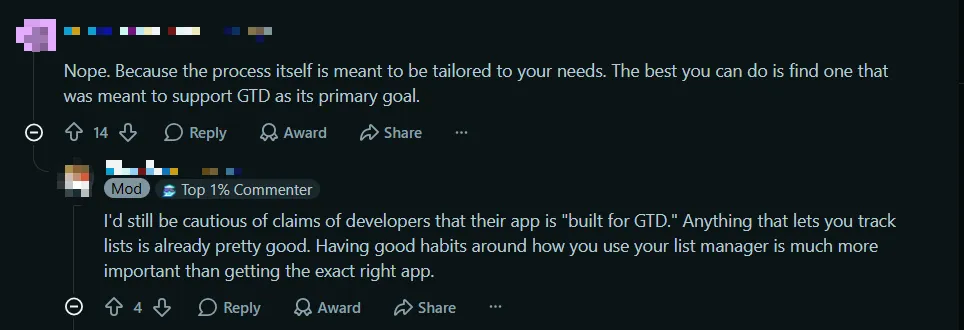
The people I wanted to help were being told not to look for what I was building.
That was the first crack in my confidence. But the real blow was still coming.
The Reality Check
I kept searching. And then I found Mindwtr.
Open source. Free. Built specifically for the GTD workflow. Syncs across desktop and mobile. Every feature I’d spent three weeks building, and more I hadn’t even thought of.
I stared at the screen. I’d been building a mobile-only app in a space where a better, free, cross-platform version already existed. Something I could have found in five minutes of research before writing a single line of code.
Three weeks of intense work, gone. Not because the code was bad. Not because I failed at building. Because I never checked whether what I was building needed to exist.
I downloaded Mindwtr that night. It worked better than my app. On my laptop too.
That was the moment I realized I wasn’t a founder. I was a beginner who got excited and moved too fast.
The Confidence Curve
There’s a concept called the Dunning-Kruger effect. It describes how people with low ability at a task tend to overestimate their ability. There’s a famous graph: confidence starts high when you know a little, crashes when you realize how much you don’t know, then slowly climbs back as you actually learn.
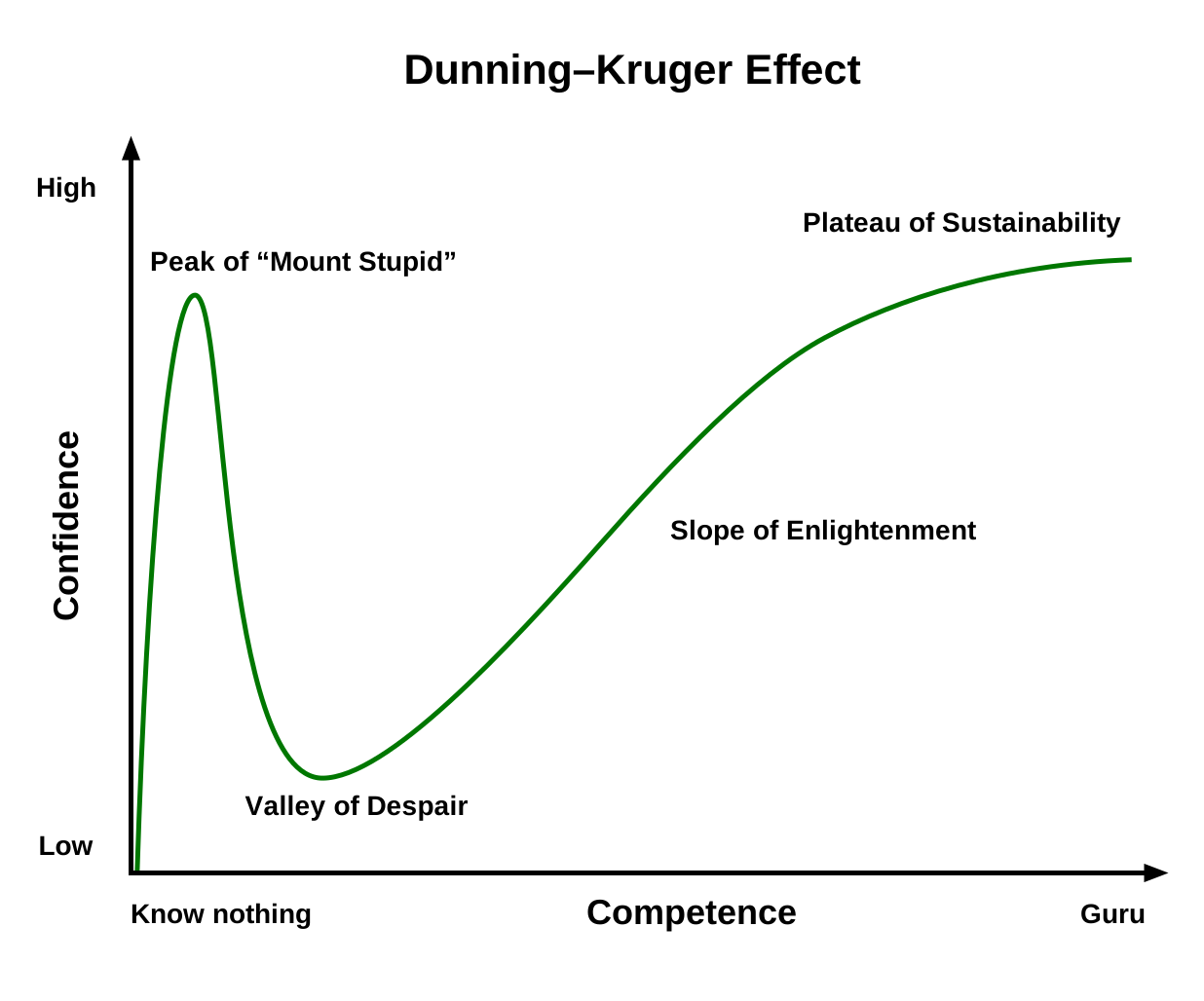
I was at the top of that curve. Peak Mount Stupid. I knew just enough to build something, and that was enough to convince me I knew enough to sell it.
The more you learn, the more you realize you don’t know. I knew React Native basics. I knew Supabase. I knew how to scaffold an MVP with structure. But I didn’t know git beyond add and commit. I didn’t know database design beyond foreign keys. I didn’t know indexing, caching, N+1 query problems, or any of the things that separate a prototype from a product.
I’d learned just enough to be dangerous. Not enough to be useful.
What I’m Doing Now
I’m slowing down.
I’m learning git properly: rebase, merge conflicts, real workflows. I’m learning databases: indexing, performance, design patterns. I’m learning the fundamentals I skipped because I was too busy chasing the next idea.
It’s less exciting than building a business. It’s more valuable.
Learning by doing works. I’m not going to pretend those three weeks were wasted. I can scaffold an MVP now. I know React Native, Supabase, how to structure a project. I learned what market research actually means. I learned that building something is not the same as building something people need.
But I also learned that confidence without competence is just ignorance with momentum. And momentum without direction is just noise.
What I’d Tell a Friend
If you’re in the position I was — learning fast, feeling invincible, ready to build the next big thing — here’s what I’d say:
Build things. Absolutely. Learning by doing is real, and it’s faster than tutorials.
But spend a day searching for existing solutions before you write a line of code. If someone already built it better and free, that’s not a defeat. That’s research you should have done first.
And learn the fundamentals alongside your projects. Git, databases, software design. Not after you fail. Alongside. They’re the difference between a prototype and something production-ready.
Most importantly: don’t confuse early momentum with mastery. Learning fast doesn’t mean you’ve learned enough. It means you’re at the top of the confidence curve. And the drop is coming.
Have you ever been on top of that confidence curve? What snapped you out of it?
Newsletter
Early access to new posts, plus unfiltered notes and experiences.